
The Lost Bicester Priory: What Remains of the Augustinian House
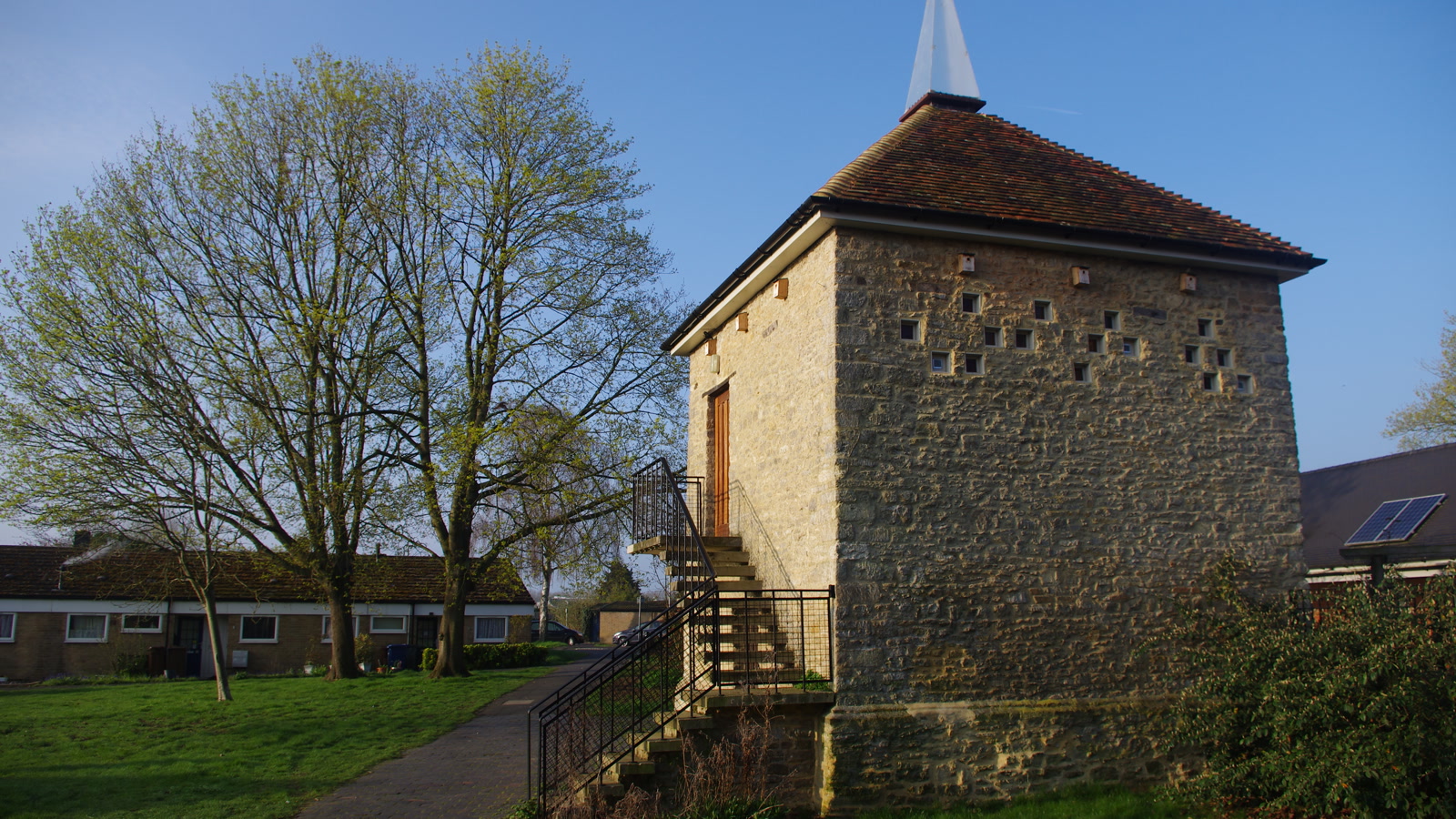
The Grade II listed circular stone dovecote at Old Place Yard, Bicester, standing on the site of Bicester Priory, photographed in April 2023. Credit: Ἀδρήστεια. CC BY-SA 4.0.

Have an authentic photo of this place to share? Share it with HelloBicester. Published contributions receive full photographer credit.
If you walk along Priory Road or turn down Old Place Yard, you are treading above the foundations of Bicester’s lost medieval monastery. For nearly four hundred years, a community of Augustinian canons lived, prayed, and worked on this land, providing spiritual guidance and managing local trade. Today, modern houses and quiet residential streets cover the site, leaving only place names and scattered stone fragments as clues to its sacred past. The story of the priory spans from its twelfth-century Anglo-Norman foundation through to its destruction under King Henry VIII. Discovering the history of Bicester Priory reveals how medieval religious life established the foundation of the town we know today.
TL;DR: Bicester Priory History
- What this post covers: The founding, daily life, and sixteenth-century dissolution of the Augustinian Priory of St Mary and St Edburg in Bicester.
- Why it matters to Bicester residents now: The priory established Bicester’s early trade rights and shaped the geographic layout of Priory Road and Old Place Yard.
- The key highlight or finding: Founded between 1182 and 1185 by Norman lord Gilbert Basset for a prior and eleven canons regular.
- What practical information they will get: Locations of surviving precinct walls, archaeological excavation findings, and where the shrine of St Edburg is preserved.
- A single immediate action they can take: Take a historic walk from St Edburg’s Church down Priory Road to spot the historic street names and stone boundary markers.
Who Founded Bicester Priory and Why Was it Built?
Bicester Priory was established between 1182 and 1185 by Gilbert Basset, the Norman Lord of the Manor. Gilbert Basset created the religious house to serve as a memorial for his family and to provide a permanent community of religious scholars who would offer daily prayers for his lineage. The monastery was dedicated jointly to Saint Mary and Saint Edburg, the seventh-century Saxon saint whose relics were brought to the site to encourage local pilgrimages.
The priory belonged to the Order of Saint Augustine, whose members were known as canons regular or Black Canons because of their dark cloaks. Unlike enclosed monks who lived in total isolation, Augustinian canons engaged directly with the wider community. Gilbert Basset endowed the priory with a prior and eleven canons, symbolic of Christ and his twelve apostles. He granted the canons farmlands, mills, and tithes across Oxfordshire, giving the religious house financial stability to build a priory church, cloister, refectory, and guest quarters.
What Did the Priory Look Like at Its Peak?
During the thirteenth and fourteenth centuries, Bicester Priory grew into a substantial monastic complex situated just south of St Edburg’s Church. The priory church featured a tall stone tower, vaulted ceilings, and stained glass windows, housing the magnificent Purbeck marble shrine of Saint Edburg. Surrounding the church were the domestic buildings of the canons, arranged around a central cloister quadrangle. The precinct also contained a chapter house, dormitory, infirmary, guest house, and working brewery.
Beyond the living quarters, the priory precinct extended across what is now Old Place Yard and Priory Lane. The canons constructed fishponds, orchards, and vegetable gardens to sustain their community, alongside barns for storing wool and grain. The priory held legal jurisdiction over local market trading, working closely with the town to establish commercial rights granted by royal charter in Bicester’s Market Square history. For generations, the priory was the wealthiest and most influential institution in the area.
How Was Bicester Priory Dissolved and Demolished?
The long history of Bicester Priory came to a sudden end in 1536 during the Dissolution of the Monasteries ordered by King Henry VIII. As part of the crown’s campaign to dismantle monastic power and seize church wealth, royal commissioners arrived in Bicester to assess the priory’s assets. The small monastery was formally surrendered to the Crown, its eleven canons were pensioned off, and its lands were confiscated.
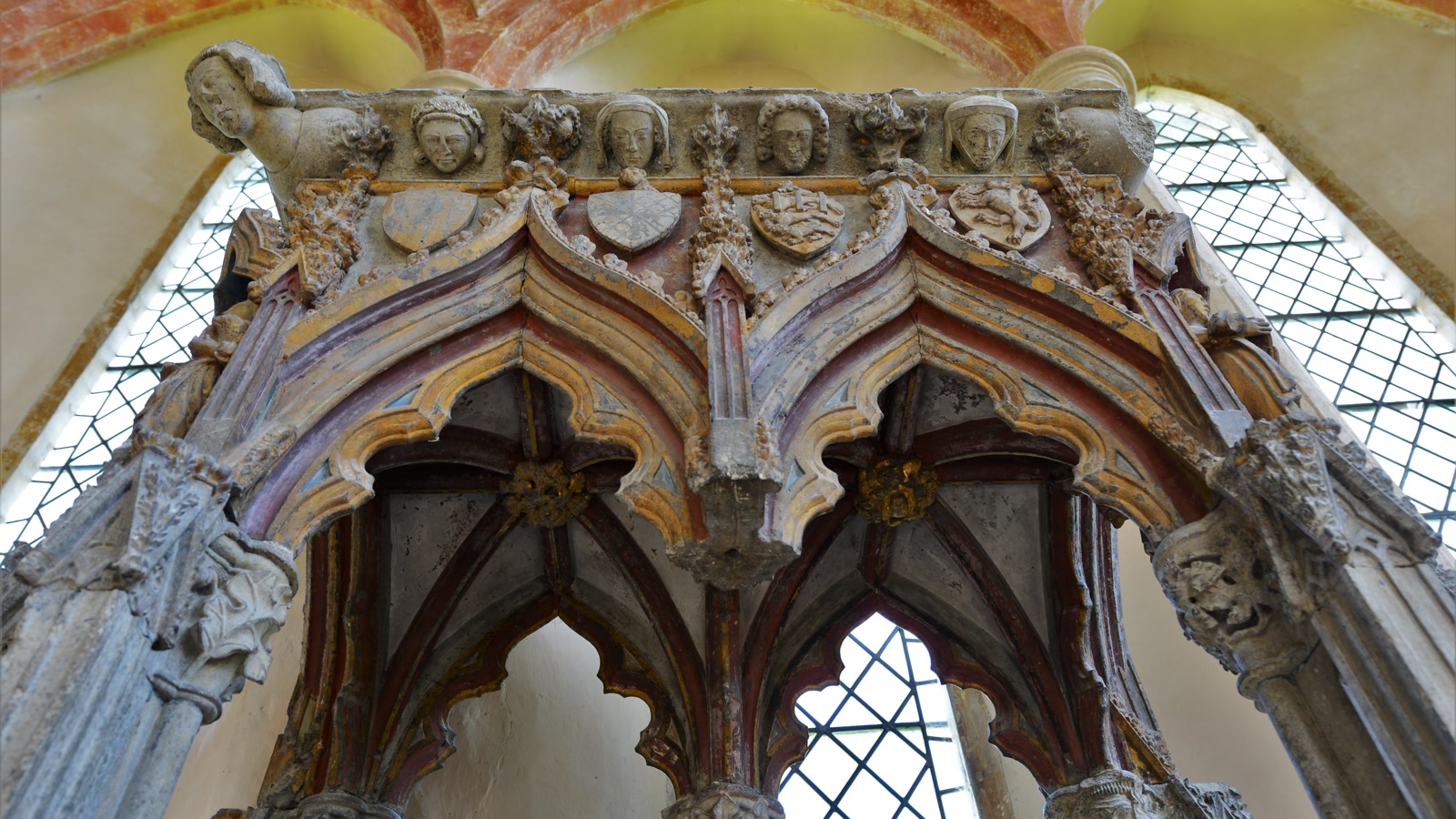
Following the surrender, the priory buildings were granted to Sir John Williams, who ordered the systematic demolition of the priory church and monastic quarters. Workers dismantled the stone walls, lead roofs, and timber beams, selling the materials for reuse across Oxfordshire. Much of the fine stone from the priory was repurposed to build local houses, garden walls, and roads throughout Bicester. Remarkably, the stone shrine of Saint Edburg was rescued by Sir Simon Harcourt and relocated to the church at Stanton Harcourt, where parts of it survive today.
What Traces of Bicester Priory Can You See Today?
Although no complete medieval buildings remain standing, careful observers can find physical traces of the priory across the town centre. Sections of original stone precinct walls survive along Priory Road and in the gardens of surrounding historic properties. Near Old Place Yard stands Old Priory House, a late sixteenth-century residence constructed shortly after the demolition using reclaimed stone and timber from the monastic ruins.
Archaeological excavations conducted in the 1960s by David Watts and expanded during recent developments successfully mapped the floor plan of the priory church and cloisters. These digs uncovered medieval floor tiles, stone coffin lids, and architectural carved fragments, confirming the scale of the former complex. Today, local street names such as Priory Road, Priory Lane, Priory Mews, and Old Place Yard preserve the spatial footprint of the medieval monastery, serving as a permanent reminder of Gilbert Basset’s twelfth-century foundation.
A Visitor’s Guide to Tracing Bicester’s Monastic History
- If you are walking around Priory Road: Look closely at the stone walls bordering the road to spot medieval masonry reused in later boundary walls.
- If you are visiting St Edburg’s Church: Walk through the churchyard to the south side where the boundary once met the priory precinct.
- If you want to read more about local heritage: Visit Garth House and Garth Park to explore Bicester Town Council’s historical displays and local heritage archives.
Remembering Bicester’s Lost Heritage
Bicester Priory may have disappeared from the modern skyline, but its legacy remains woven into the streets and history of the town.
In our next article, we will examine RAF Bicester history to discover how twentieth-century aviation shaped the town’s military landscape.